
How 3D Printing Technology Could Revolutionize the Manufactured Home Industry
It’s a well-known fact that manufactured homes are an affordable housing alternative to traditional, site-built homes. Manufactured homes are typically built using pre-manufactured parts in a factory setting before being transported to a site for installation. However, the emergence of 3D printing technology could soon revolutionize the manufactured home industry. Is it possible that one day a manufactured home factory could be completely mobile? In this post, we’ll explore how some companies are beginning to integrate 3D printing into their processes – starting with the parts of a manufactured home that could be easily built using this technology.
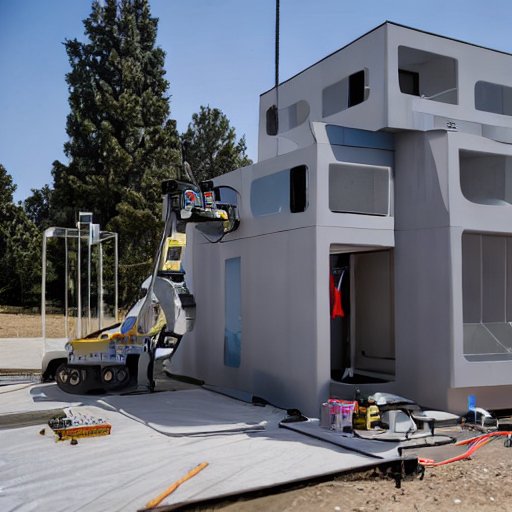
One of the most exciting developments in the use of 3D printing technology in the construction of affordable housing is the collaboration between the ICON housing company and the nonprofit organization New Story. Together they have developed a 3D printing technology called the Vulcan II. This large-scale, construction 3D printer, is designed to be transported from site to site. And it’s capable of printing a 600-800 square foot home directly on the ground or a prepared cement slab in just 24 hours. These homes are designed to be affordable and sustainable and have been deployed in several countries around the world. In essence, the Vulcan is a portable factory.
Although no manufactured home companies in the United States are currently utilizing 3D printing technology as the primary method of construction, some companies have shown interest in exploring the use of 3D printing in their manufacturing processes. For example, Clayton Homes, one of the largest manufactured home builders in the US, has partnered with the 3D printing company Mighty Buildings to explore the use of 3D printing technology in the construction process.
So, what parts of a manufactured home could we see being built using 3D printing technology in the future? Industry experts anticipate we could see interior and exterior walls, roofing and insulation, fixtures and fittings, structural components as well as foundation and footing systems all created using 3D printing technology.
While the use of 3D printing technology in the manufactured home industry is still in its early stages, it is clear that there is a growing interest in exploring the potential applications of this technology. And that interest is met with a growing need for access to quality, affordable housing. As the technology continues to evolve and become more affordable and accessible, it is likely we will see more manufactured home companies incorporating 3D printing into their construction processes.